



Garbage trucks are among the heaviest vehicles on our roads, weighing tens of thousands of pounds. The exact weight depends on the type of truck and whether it’s empty (curb weight) or fully loaded with trash. Curb weight refers to the truck’s weight empty, while fully loaded weight means the truck plus its cargo of compacted garbage. In general, an empty garbage truck might weigh around 15,000 to 33,000 pounds (7.5 to 16.5 tons), and when loaded with trash it can reach 50,000–60,000 pounds (25–30 tons). For example, one waste company notes that their competitors’ trucks average about 35,000 lbs empty and ~60,000 lbs when full. Below, we break down the typical weight ranges for different types of garbage trucks. Rear loaders, front loaders, and side loaders. And then discuss U.S. legal weight limits and why these trucks’ weight matters for roads, fuel, and emissions.
| Truck Type | Empty Weight (Curb Weight) | Loaded Weight (Gross Weight) | Typical Trash Capacity | Notes |
|---|---|---|---|---|
| Rear Loader | 15,000–30,000 lbs | 40,000–60,000 lbs | 8–15 tons | Common in residential areas. Rear compactor doubles capacity. |
| Front Loader | 20,000–25,000 lbs | 60,000–80,000 lbs | 12–25 tons | Used for commercial dumpsters. Larger body and lifting forks. |
| Side Loader | 20,000–30,000 lbs | 50,000–66,000 lbs | 8–14 tons | Automated arm for residential curbside bins. One-driver operation. |
| Typical 3 Axle Garbage Truck (GVWR) | ~Empty varies | Max GVWR 50,000–52,000 lbs | Varies by compaction level | Limited by axle configuration. |
| US Federal Legal Limit | — | 80,000 lbs (40 tons) | — | Applies to interstate highways for total vehicle weight. |
Rear Loader Garbage Trucks
Rear loader garbage trucks are a common sight in residential neighborhoods. They are loaded from the rear: sanitation workers toss bags or empty small bins into the back hopper, and a hydraulic compactor compresses the waste inside. A typical rear-loader truck itself (empty) weighs on the order of 15,000 to 25,000 pounds (about 8–12.5 tons) depending on its size. Larger models can be heavier – some full-size rear loaders weigh around 30,000+ lbs empty. When filled with garbage, a rear loader’s gross weight (vehicle plus load) can roughly double. They can carry 8 to 15 tons of compacted trash in a load. In other words, a rear loader might weigh on the order of 50,000 pounds or more when fully loaded (~25 tons). In practice, many rear loaders in service weigh about 40,000–60,000 lbs while working (with a load), which helps explain why these heavy trucks are tough on neighborhood roads.
Front Loader Garbage Trucks
Front loader garbage trucks are the giants often used for commercial dumpsters. You can recognize them by the large forks on the front that lift dumpsters over the cab to empty them into the top of the truck’s hopper. These trucks are built on heavy-duty chassis to handle big loads. A front-loading garbage truck typically weighs around 20,000–25,000 pounds empty (10–12.5 tons), making them a bit heavier than most rear loaders even before adding any waste. The reason is that front loaders are designed with extra lifting gear and a bigger body (often up to 40 cubic yards capacity). When loaded, a front loader packs in a huge amount of trash – they can carry 12 to 25 tons of waste in one trip. That means a full front loader truck might weigh on the order of 60,000–80,000 pounds (30–40 tons) rolling down the road. (For safety, these trucks usually have multiple axles to distribute this weight.) It’s worth noting that 80,000 lbs is around the upper legal limit for trucks on most U.S. highways, so front loaders carrying very heavy loads must be mindful of weight regulations, as discussed later.
Side Loader Garbage Trucks
Side loader garbage trucks are often used for residential curbside collection, featuring a hydraulic arm on the side that grabs and lifts trash carts. This design lets one driver do the job without helpers, improving efficiency. The truck’s weight is similar to a rear loader of comparable size, since it has a compactor but also the side-arm mechanism. A typical side-loading truck might weigh about 20,000–30,000 lbs empty (10–15 tons). They usually have capacity for roughly 20–30 cubic yards of waste, and can haul about 8 to 14 tons of trash when full. In total, a side loader truck loaded to capacity may weigh on the order of 50,000–66,000 lbs (25–33 tons) gross. That’s why, just like other garbage trucks, side loaders have powerful diesel engines and strong brakes to handle their bulk. Despite having only one operator, the truck itself is as hefty as other types. A fully loaded side loader can easily top 25+ tons moving down the street.
U.S. Legal Weight Limits for Garbage Trucks
Heavy trucks must obey strict weight limits for safety and infrastructure protection. In the United States, the federal gross weight limit for commercial trucks on interstate highways is generally 80,000 pounds (40 tons). This is the maximum legal weight for the truck, fuel, passengers, and cargo combined. Many garbage trucks don’t quite reach that weight in normal operation – for example, a standard three-axle garbage truck often has a Gross Vehicle Weight Rating (GVWR) around 50,000–52,000 lbs. (GVWR is the manufacturer-specified max operating weight for the vehicle.) The somewhat lower GVWR is because garbage trucks tend to have fewer axles or a shorter wheelbase than long-haul semi-trucks, so they can’t spread 80,000 lbs over enough axles. Indeed, a typical residential garbage truck with three axles might be limited to ~51,000 lbs legally, while larger four-axle trucks (or those with drop-down tag axles) can approach the 80,000 lb limit.
It’s not just total weight – axle weight limits also apply. Regulations usually cap load per axle (often around 20,000 lbs per single axle, varying by state). So even if a garbage truck’s total weight is under 80k, it must be distributed so no axle is overloaded. To comply, some heavy front loaders or roll-off trucks use extra axles or special suspension to spread out the weight. Garbage collection vehicles primarily operate on local streets, where state and local weight rules may be stricter than federal highways. Many localities post weight limits on certain roads or bridges to prevent damage. Sanitation departments and waste companies must plan routes that avoid weight-restricted roads and avoid overloading trucks. If a garbage truck is over the legal weight, it can lead to fines and even being taken out of service. A serious issue that companies try to avoid. (Unfortunately, there have been cases where garbage transfer trucks were found routinely exceeding weight limits by as much as 20,000 lbs when leaving transfer stations, highlighting the need for enforcement.) In summary, U.S. laws typically limit garbage trucks to about 25–40 tons gross depending on their configuration, and operators must follow these rules to run legally and safely.
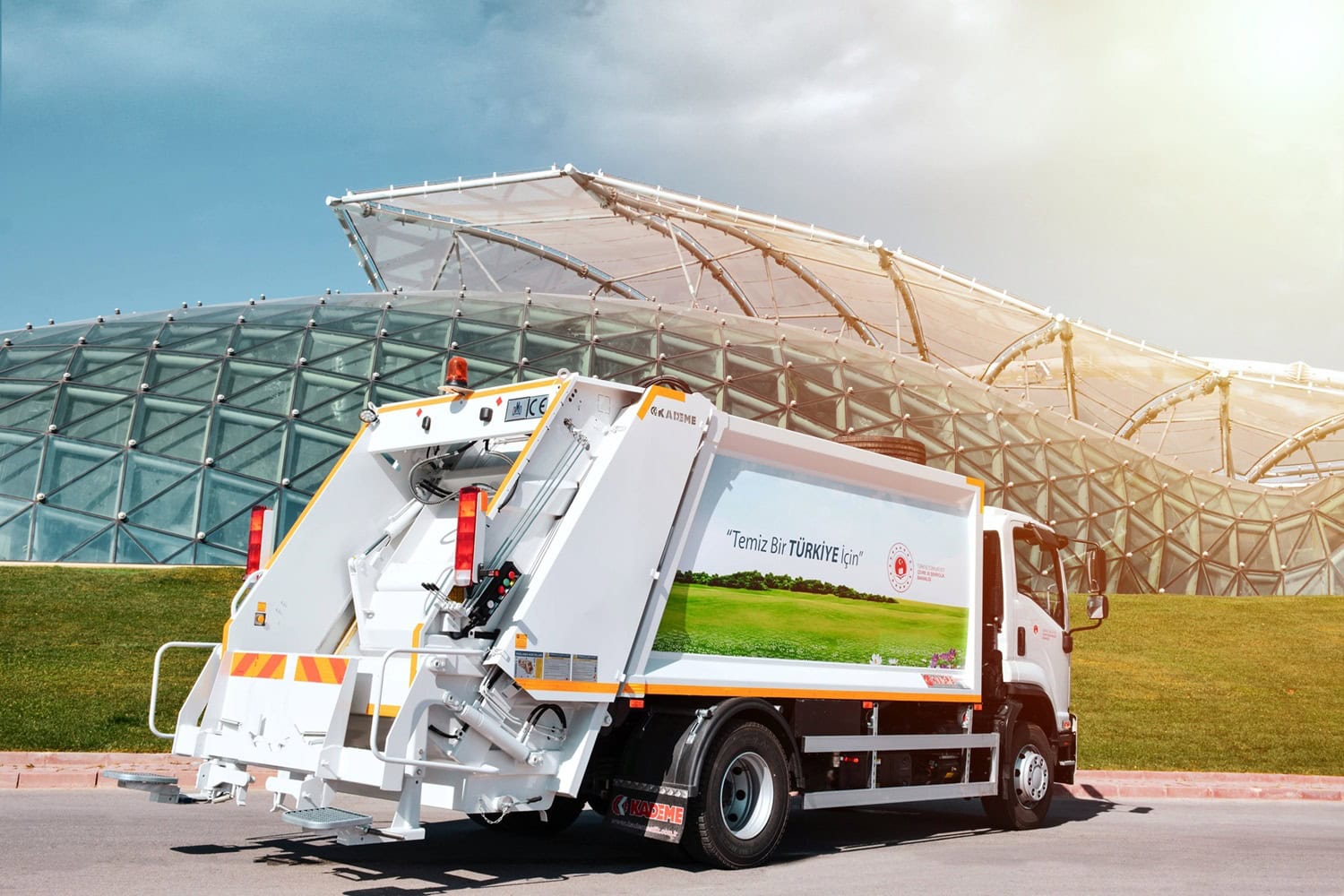
Discover Kademe’s Waste Refuse Equipment
Explore high-performance municipal vehicles such as garbage compactors, hooklift systems, and vacuum sweepers designed for efficient urban waste management.
Why Truck Weight Matters: Road Wear, Fuel Use, and Emissions
Heavy garbage trucks do an essential job, but their weight comes with side effects. Here are a few key impacts of these trucks’ hefty weights:
- Road Wear: A fully loaded garbage truck can weigh as much as 20–30 tons, and this mass has a huge impact on pavement. The damage a vehicle causes to roads increases exponentially with weight. Studies have found that a single garbage truck’s wear-and-tear on pavement can equal that of over 1,000 passenger cars. Plus, garbage trucks make frequent stops and turns, which further stresses asphalt. This is why neighborhoods with daily trash collection see more road maintenance needs. The trucks’ weight is literally grinding down the streets over time.
- Fuel Usage: Heavier vehicles need more energy to move, especially with stop-and-go driving. Garbage trucks are notoriously fuel-inefficient. A typical diesel garbage truck only gets around 3 miles per gallon in real-world use. Each additional pound means the engine works harder, so carrying tons of trash leads to thousands of gallons of diesel burned per year. A city garbage truck might burn $40,000+ worth of fuel annually. This heavy fuel consumption is directly tied to the truck’s weight and the constant stopping to pick up bins.
- Emissions: With such high fuel usage, garbage trucks also generate a lot of emissions. All that diesel burned translates to greenhouse gases and air pollutants. In fact, one analysis noted that an average garbage truck emits roughly 20 times the carbon of an average American car or light-duty vehicle. That means each trash truck has a carbon footprint comparable to dozens of homes’ energy use. The weight (combined with inefficiencies of stop-start driving) is a big factor. A lighter vehicle or one with hybrid/electric technology can reduce fuel burned and emissions. Cities are exploring alternatives like natural gas or electric garbage trucks to cut emissions, precisely because traditional trucks are so heavy and fuel-hungry.
In conclusion, garbage trucks weigh a lot. Typically on the order of 15–30 tons in service. And this weight varies by truck type and how much trash it’s carrying. Rear loaders, front loaders, and side loaders have different designs but all end up as very heavy vehicles when loaded. U.S. regulations cap most garbage trucks at about 40 tons (80,000 lbs), and usually they operate below that for safety. The immense weight has important consequences: it contributes to road damage, requires massive fuel consumption, and leads to high emissions. Understanding how much a garbage truck weighs gives an appreciation for the engineering behind these vehicles and the logistical planning (and infrastructure costs) that go into managing our daily waste. Despite their heavy footprint, garbage trucks perform the critical job of keeping our communities clean. A trade-off between utility and impact that city planners are always trying to improve with better technology and smarter policy.
Sources: Recent data and references were drawn from waste industry publications, municipal studies, and U.S. regulations to ensure accuracy.
