


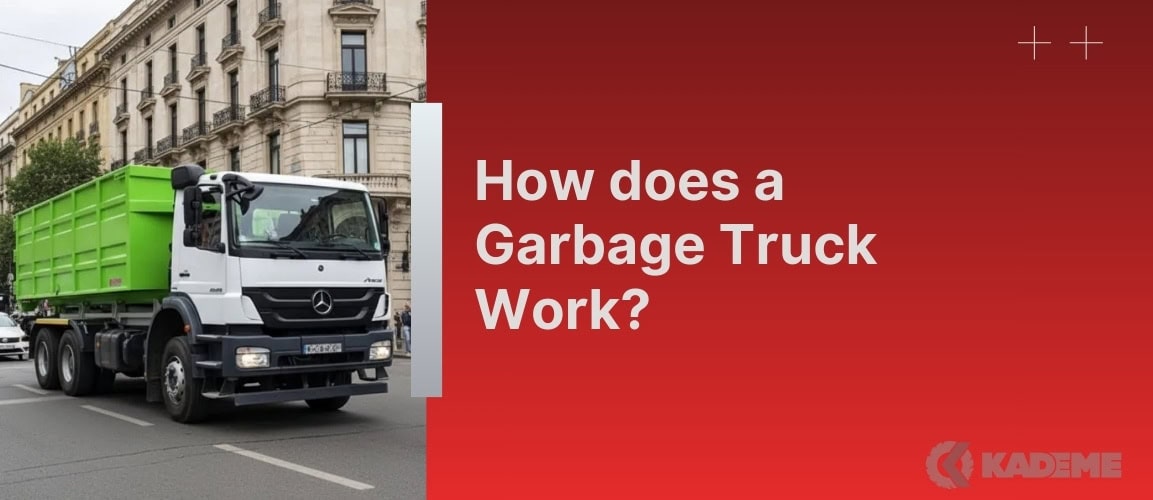
Garbage trucks are vehicles specially designed to collect municipal waste and transport it to disposal sites. They are built with powerful machinery to lift trash bins, crush garbage, and hold large amounts of waste for transport.
Collection Process
These hydraulic systems generate the force needed to handle very heavy loads. By compacting waste tightly, a garbage truck can carry much more trash per trip than without compression.
Types of Garbage Trucks
- Front-Loader Trucks: These serve large commercial dumpsters. A set of hydraulic forks in front of the cab hooks under a dumpster and lifts it over the cab. The dumpster is then inverted to dump waste into the truck’s hopper. A built-in compactor blade pushes the trash toward the rear of the truck. Front-loaders work well for businesses and industrial sites with standardized bins.
- Side-Loader Trucks: These collect curbside bins from the side of the street. There are manual and automated versions. Manual side-loaders require workers to move bins into a side hopper. Automated side-loaders use a mechanical arm or lift on the truck’s side. The driver stays in the cab and controls the arm to grab and empty each bin into the hopper. In both cases, a compactor plate pushes the waste into the truck body. Side-loaders are popular for residential routes because they allow one operator to collect multiple bins efficiently.
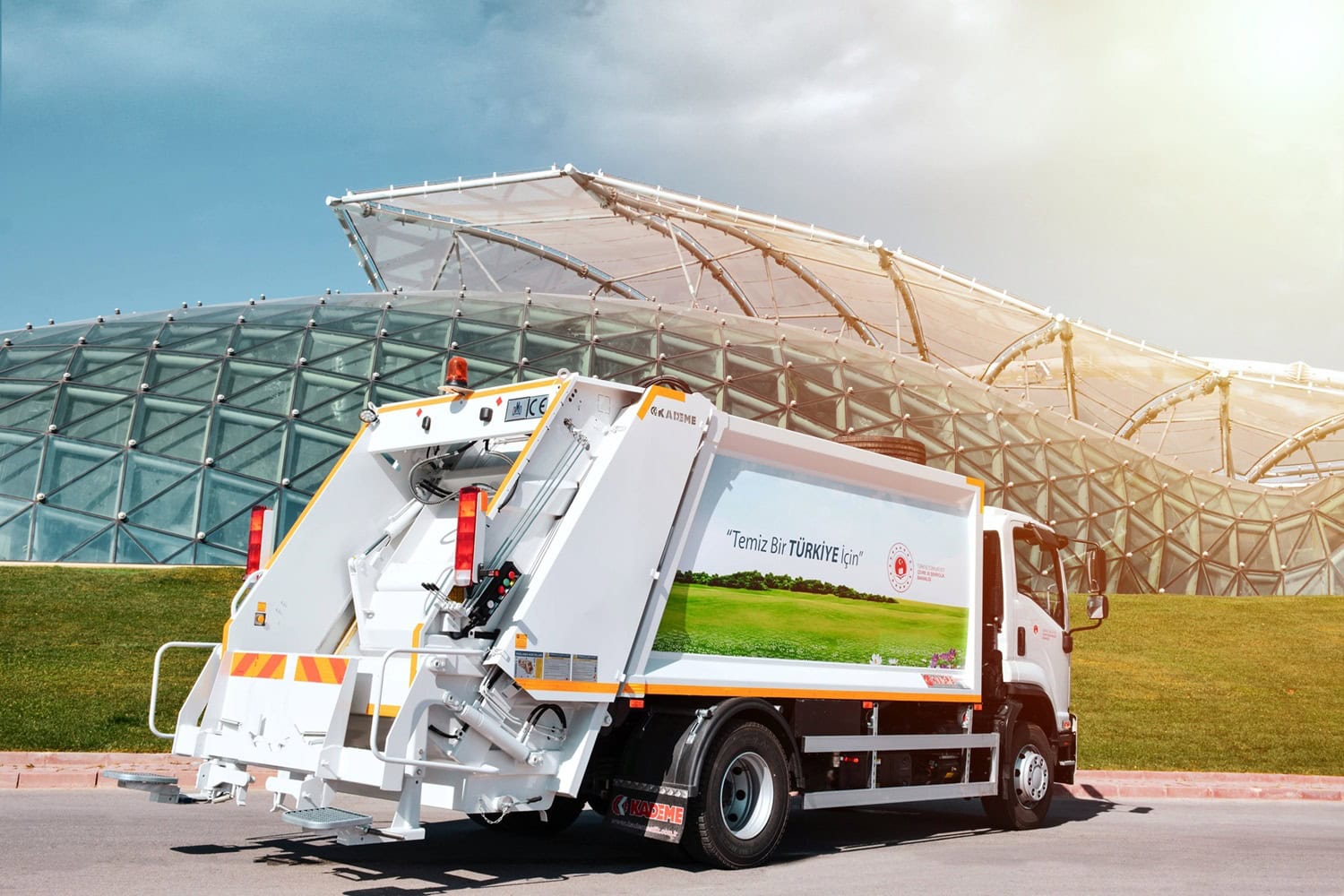
- Rear-Loader Trucks: These are the most common type worldwide. Waste is thrown or rolled into a rear hopper at the back of the truck. Inside, a powerful hydraulically-powered blade (often called a packer blade) moves back and forth to scoop waste out of the hopper and compress it against a moving wall. This compresses garbage into the body of the truck. Rear-loaders can handle various types of bins and trash bags, and crews can collect waste from either side of the street. They are versatile for both residential and some commercial collection.
- Roll-Off Trucks: These haul large open-topped containers (often called dumpsters) used for bulky waste and construction debris. The truck carries a removable container on a tilting bed. When full, the driver uses a winch cable or hook-lift hydraulics to roll the container off the truck and leave it at the site. After loading waste into the container (no onboard compaction), the container is rolled back onto the truck and taken to a disposal facility, where it is offloaded. Roll-off trucks do not compact waste; they are used when large, irregular items or very large volumes must be moved in one load.
Discover Kademe’s Waste Refuse Equipment
Explore high-performance municipal vehicles such as garbage compactors, hooklift systems, and vacuum sweepers designed for efficient urban waste management.
System Variations and Comparisons
- Manual vs. Automated Loading: Traditional manual trucks require crew members to handle each bin by hand. Automated trucks use hydraulic arms or lifts. For example, automated side-loader trucks use a robotic arm controlled by the driver to grab and dump bins, so one operator can do the work of several people. This reduces labor and speeds up collection.
- Compaction vs. Non-Compaction: Most garbage trucks use a hydraulic compactor to press and crush trash, drastically reducing its volume. In contrast, roll-off trucks simply carry open containers without compressing the waste onboard. Thus, a compacting truck can haul far more waste per trip.
- Usage Scenarios: Front-load trucks are mainly used for commercial dumpsters (e.g. restaurants, stores) because they can lift very large bins. Side- and rear-load trucks are typically used for residential neighborhoods and apartments, where workers collect many smaller bins. Roll-off trucks are used for bulky waste at construction sites or cleanup projects. Each design matches different collection needs and waste types.
In summary, modern garbage trucks use a combination of mechanical lifting and hydraulic compaction to handle waste efficiently. For example, a strong compaction system can shrink garbage by up to six times, allowing one truck to transport much more trash per trip. These features make waste collection faster and more efficient, reducing the number of trips and saving fuel.
