How Does a Composting Machine Work? Choosing Capacity for Hotels, Hospitals and Cities
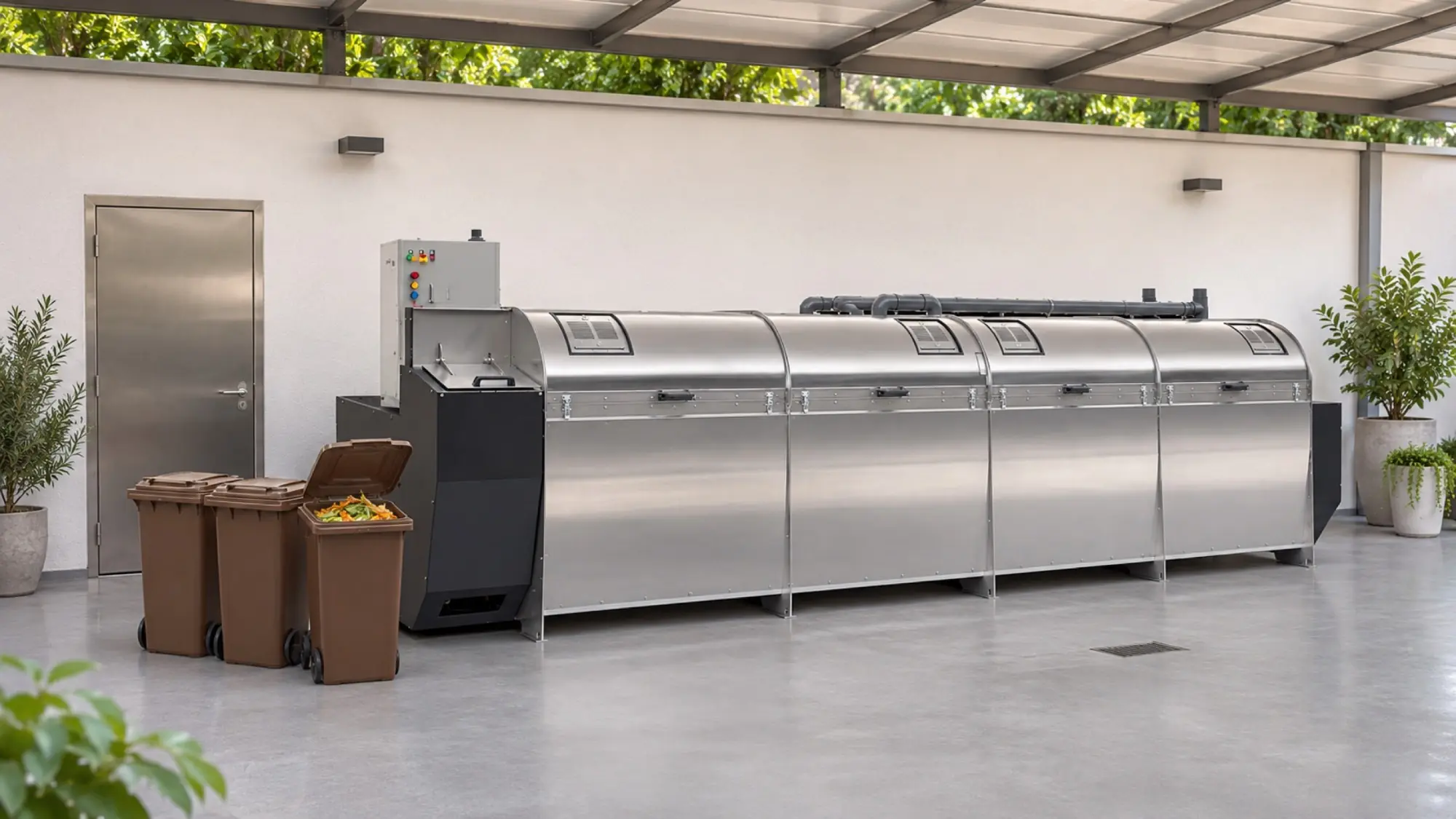
A composting machine shreds kitchen and garden waste, then lets microorganisms break it down in an aerated, continuously mixed chamber until it becomes compost. Kademe’s Yöntem series does this automatically and processes 100 to 500 lt of waste a day depending on the model. According to Kademe, the waste turns into mature compost within a few weeks.
For a hotel, a hospital or a large canteen, food waste is the wet, fast-rotting part of what goes into the bin every day. Treating it on site means less waste leaves for landfill, and recyclables stay clean and dry instead of mixing with food scraps. To choose the right machine, you first need to know how it works and then how much waste you actually produce.
How does a composting machine work?
A composting machine treats waste in four stages. In the Kademe Yöntem series, all four run automatically in the same body, and the operator’s job is limited to sorting the waste correctly and loading it.
- Sorting. Packaging, glass, metal and plastic are removed before the waste goes into the machine.
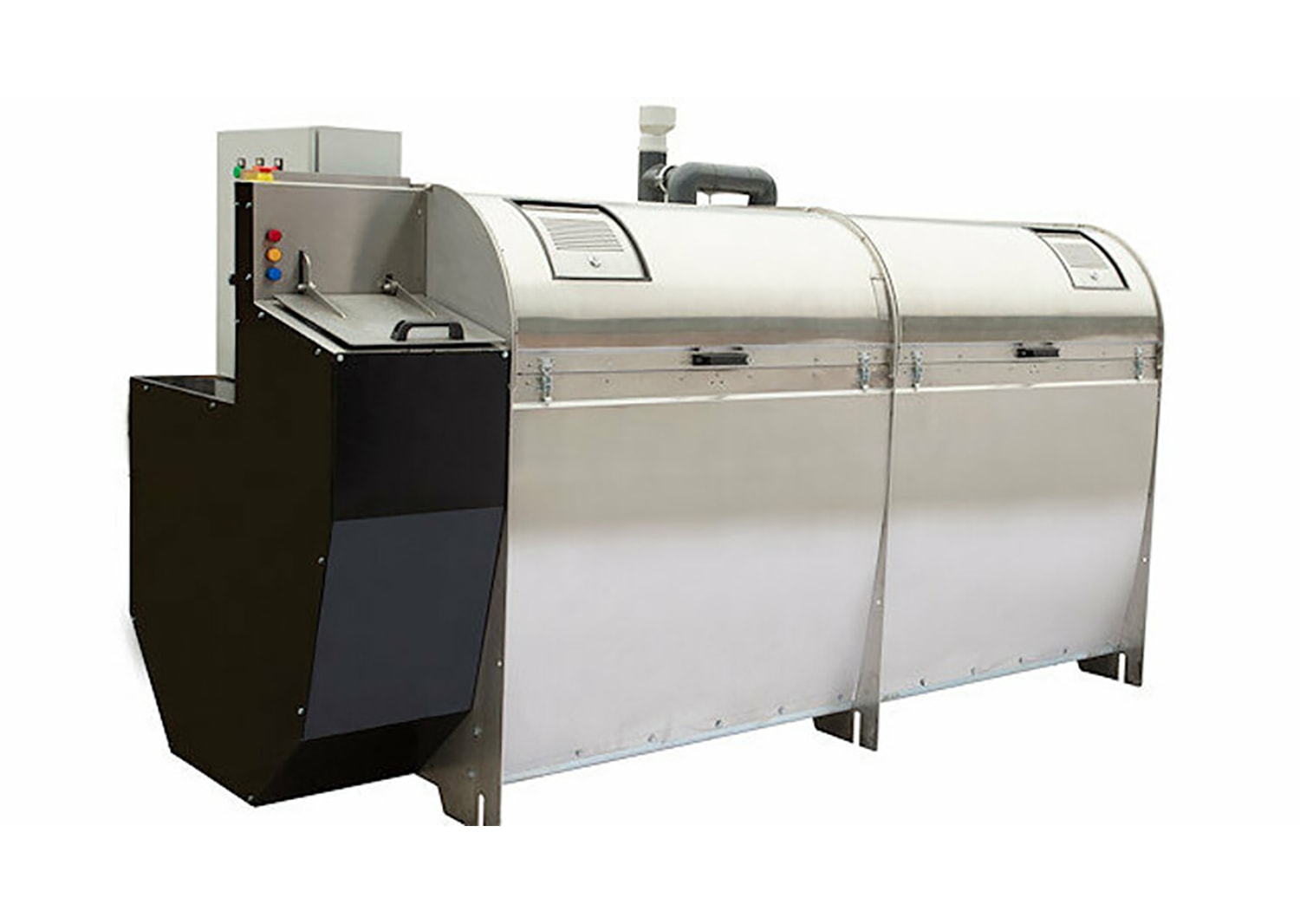
- Shredding. The waste is cut into small pieces in the machine’s shredding hopper. Smaller pieces speed up the work of the microorganisms.
- Aerobic decomposition. Microorganisms break down the shredded waste in an aerated chamber. Rotating mixing arms turn the material regularly so the process stays even.
- Maturing. The decomposed material is left to rest and turns into mature compost. On the Yöntem 100, this stage takes place in a separate maturing chamber.
For example, in a staff canteen the vegetable peelings and plate waste collected after lunch are loaded the same day. Shredding and mixing run in the machine’s own cycle, so nobody needs to stand beside it.
What waste can go into a composting machine?
Biodegradable waste goes into a composting machine. The European Commission defines biowaste as biodegradable garden and park waste, and food and kitchen waste from households, restaurants, caterers and retail premises, together with comparable waste from food processing plants.
According to Kademe, the Yöntem series processes food leftovers, vegetable and fruit peel, tea and coffee grounds and eggshells, and the Yöntem 500 also takes park and garden waste. Packaging and other inorganic waste must be removed before loading.
For example, in a school canteen the tea grounds and fruit peel go into the compost caddy, while napkin wrappers and plastic cups go into the recycling bin. The cleaner the sorting, the less foreign material ends up in the compost.
Which capacity do you need?
Your daily volume of organic waste decides the capacity. Kademe builds the Yöntem series in four sizes, and the models differ in how much waste they process each day, how much electricity they use and how much space they take.
| Model | Daily capacity | Average electricity use (data sheet) | Dimensions (mm) |
|---|---|---|---|
| Yöntem 100 | 100 lt of waste | 3.5 kW/day | 1,130 x 3,000 x 2,100 |
| Yöntem 200 | 200 lt of waste | 4.5 kW/day | 1,150 x 5,450 x 2,100 |
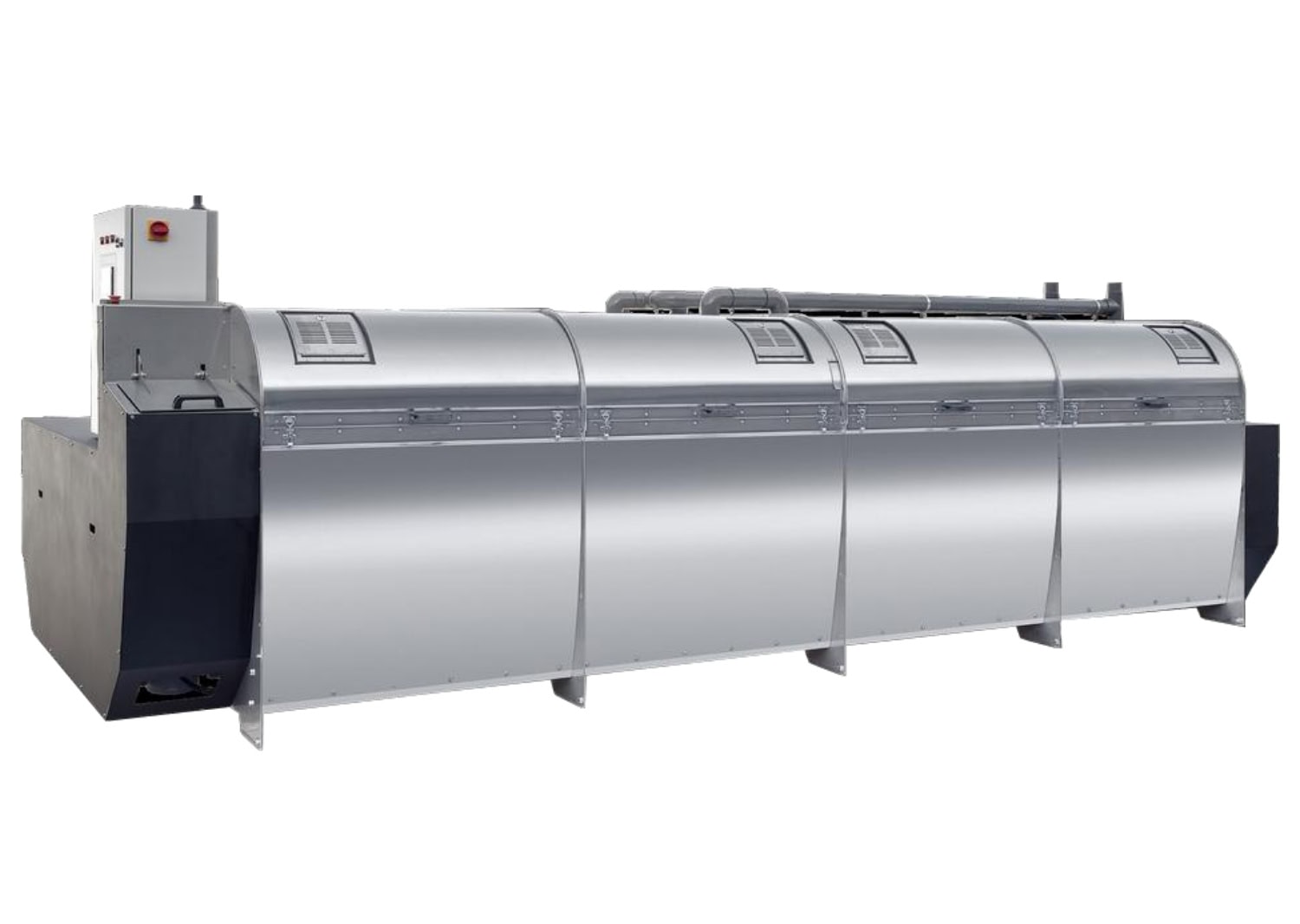
| Yöntem 400 | 400 lt of waste | 7 kW/day | 2,340 x 5,450 x 1,900 |
| Yöntem 500 | 500 lt of waste | 7 kW/day | 2,340 x 5,450 x 2,100 |
Measure your waste instead of estimating it. For one week, collect kitchen and canteen waste in buckets marked in litres and write down each day’s total. Choose the capacity by the busiest day, not the weekly average, because waste the machine cannot process still ends up in the bin.
Take a typical scenario. A hotel with two restaurants measures for a week and finds 160 to 230 lt of organic waste a day. The average stays under 200 lt, but the busiest day goes over it. For this hotel, the Yöntem 400 is a safer choice than the Yöntem 200.
What does installation need?
For installation, check the power supply, the space the machine takes and the route the waste travels to reach it. All Yöntem models run on 380 V three-phase power, so the site needs a three-phase connection.
Plan the space from the dimensions in the table. Even the smallest model, the Yöntem 100, is 3,000 mm long, and the Yöntem 200, 400 and 500 are 5,450 mm long. Leave room around the machine for staff and waste bins during loading.
For example, a covered area near the kitchen’s back door saves carrying waste through long corridors. Walking the route between the kitchen and the machine tells you more than the floor plan does.
How does on-site composting help with landfill targets?
On-site composting keeps food waste out of landfill, which is where its main environmental impact lies. According to the European Commission, the main threat from biowaste is the methane it produces as it decomposes in landfills, and the Landfill Directive obliges Member States to reduce the amount of biodegradable municipal waste they landfill.
The same directive, as amended, limits the share of municipal waste landfilled to 10% by 2035. Treating food waste close to where it is produced is one way to keep it out of that share.
For example, a hospital that composts its kitchen waste on site sends less to the general waste bin and keeps its recyclables clean. Check your national and local rules on biowaste collection and on using compost before you plan the project.
Where can the compost be used?
According to Kademe, the compost can be used as a soil improver in agriculture and landscaping. The simplest use is in the institution’s own gardens, parks or tree pits.
Selling compost or using it on farmland can be subject to separate quality rules. For example, a city can pass compost from its social facilities to its parks department. If you plan to give it to farmers or sell it, have it tested and check the rules with your environmental authority first. Our article on what compost is and its benefits covers the material itself.
Where should you start?
Measure your organic waste for a week and note the amount on the busiest day. That one figure decides the capacity, and the capacity decides the machine size and power supply.
All technical values for the models are on the composting machines page. If you send us your daily amount and site details, our sales engineers will reply within 24 hours with a suitable model.
This article gives general guidance. Permit and quality rules for composting differ between countries, so confirm the rules that apply to your institution with your environmental authority.
Frequently asked questions
How long does a composting machine take to make compost?
According to Kademe, the Yöntem series turns waste into mature compost within a few weeks. The time depends on the type of waste and how much is loaded.
How much electricity does a composting machine use?
Kademe data sheets give average electricity use of 3.5 kW/day for the Yöntem 100, 4.5 kW/day for the Yöntem 200 and 7 kW/day for the Yöntem 400 and 500. All models need a 380 V three-phase connection.
Can a composting machine be used at home?
The Yöntem series is built for institutions. The smallest model handles 100 lt a day, needs three-phase power and is 3,000 mm long, so it suits hotels, schools, hospitals and residential complexes rather than single homes.
Which institutions use composting machines?
Kademe builds the Yöntem series for hotels, hospitals, schools, campuses and municipal facilities, where large amounts of organic waste are produced every day.
Where does this information come from?
Machine values come from Kademe’s composting machine product pages and data sheets. The biowaste definition, the methane risk and the 2035 landfill limit come from the European Commission’s page on biodegradable waste and the Landfill Directive. This information is current as of November 2026.